
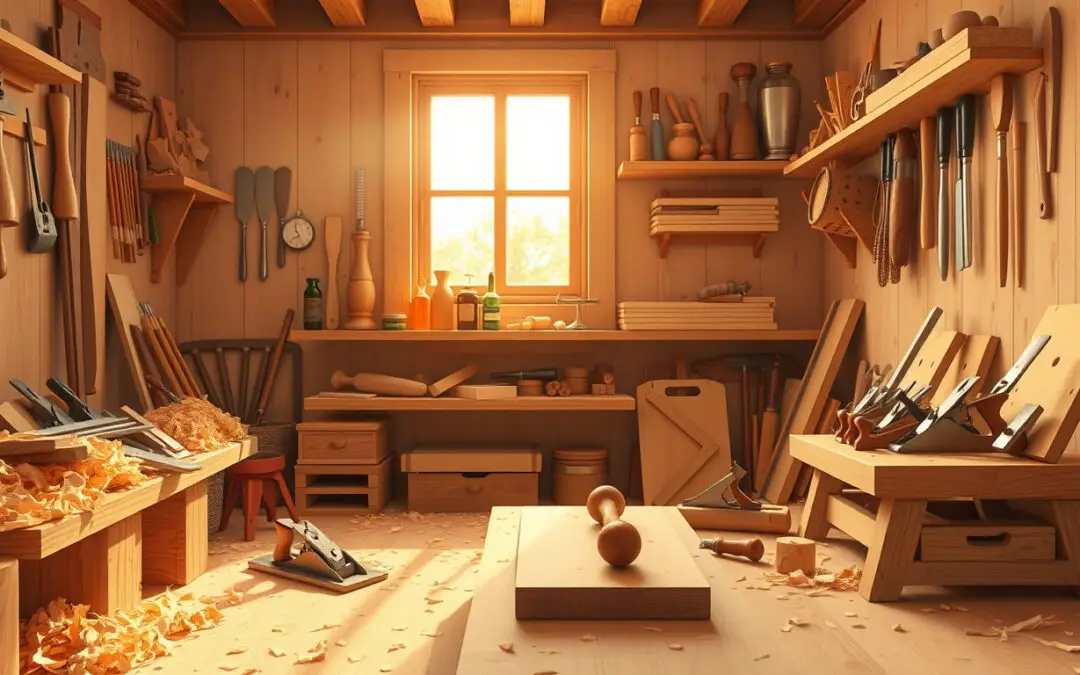
Woodworking is an age-old craft that has captivated the hearts and minds of many creative individuals.
Whether you are looking to transform raw wood into stunning furniture, intricate decor, or simple household items, understanding the basics of woodworking is essential.
A great way to start this exciting journey is by mastering the essential hand tools required for woodworking.
In this beginner’s guide, we will walk you through the fundamentals of woodworking, introduce you to must-have hand tools, share effective techniques for their use, and provide tips for maintaining these valuable assets.
Get ready to roll up your sleeves and unlock your potential in the world of woodworking!
Pop by Uncle John’s Emporium for some original designs and gift ideas.

Key Takeaways
- Understanding woodworking fundamentals is crucial for beginners.
- A well-chosen set of essential hand tools lays the groundwork for success.
- Effective techniques enhance skill and precision in using hand tools.
- Regular maintenance ensures longevity and performance of your hand tools.
- Mastering the basics boosts confidence and encourages creativity in woodworking.
Understanding the Basics of Woodworking
Woodworking is a time-honored craft that combines creativity and technical skill, making it an appealing hobby for many.
Understanding the basics of woodworking is crucial for beginners, as it lays the foundation for more advanced techniques and projects.
At the heart of woodworking are the essential hand tools that enable artisans to transform raw timber into beautiful, functional pieces.
Familiarizing yourself with tools such as chisels, hand saws, and planes is vital, as each serves a specific purpose in shaping, cutting, and finishing wood.
Incorporating these hand tools into your woodworking practice not only enhances precision but also provides a tactile connection to the material, enriching the overall woodworking experience.
Whether you aspire to create intricate furniture or simple decorations, mastering these foundational skills will pave the way for your success in the world of woodworking.
Essential Hand Tools Every Beginner Needs
If you’re diving into the world of woodworking, having the right hand tools is crucial for both your projects and your overall experience.
For beginners, investing in essential woodworking & hand tools will set a solid foundation for your skill development.
Start with a quality set of chisels; these versatile tools are perfect for carving, shaping, and adding intricate details to your wood projects.
Next, a reliable hand saw is essential—choose a panel saw for general cutting tasks and a coping saw for curves and detailed work.
Don’t overlook the importance of a good hammer; a claw hammer is ideal for driving nails and removing them when needed.
Additionally, a square, or framing square, is invaluable for ensuring your angles are precise, while a tape measure will keep your dimensions accurate.
Lastly, a simple hand plane can refine the surface of the wood and help you achieve that perfect finish.
By equipping yourself with these essential woodworking & hand tools, you’ll be well on your way to crafting beautiful pieces with confidence.
‘The difference between a good carpenter and a great one is in the details; mastering the hand tools is key to unlocking the true beauty of woodworking.’
Pop by Uncle John’s Emporium for some original designs and gift ideas.

Techniques for Using Hand Tools Effectively
Woodworking enthusiasts often turn to hand tools for precision and craftsmanship, making it essential to master the techniques for using woodworking & hand tools effectively.
One fundamental technique is to maintain a sharp edge on all cutting tools, as a sharp blade reduces the risk of accidents and improves accuracy in your work.
Additionally, utilizing the proper grip and stance can significantly enhance control and reduce strain during prolonged use.
For instance, when sawing, positioning your body at a comfortable angle allows for smoother strokes and better leverage.
Another vital technique involves understanding the grain of the wood; working with the grain can prevent tearing, ensuring cleaner cuts and edges.
Lastly, familiarizing yourself with each tool’s specific purpose and maintenance routines further elevates your woodworking skills, allowing you to produce high-quality projects while enjoying the art of hand tool craftsmanship.
Tips for Maintaining Your Hand Tools
Maintaining your woodworking and hand tools is essential for ensuring they remain functional, safe, and effective over time.
Firstly, always clean your tools after use; wood shavings, dust, and moisture can lead to rust and deterioration.
Using a simple mixture of soap and water can help remove debris effectively.
Additionally, regularly sharpen your blades; dull tools not only make your work more difficult but can also increase the likelihood of accidents.
Consider investing in a quality sharpening stone or honing guide for precise edge maintenance.
Oil your metal tools periodically to protect them from corrosion—just a few drops of light machine oil will suffice to keep them in good condition.
Lastly, store your tools in a dry, organized space; using a pegboard or toolbox can protect them from damage and extend their lifespan significantly.
By following these simple tips for maintaining your woodworking and hand tools, you’ll ensure they perform at their best, allowing you to create beautiful wood projects with ease.
[color=rgb(110, 109, 109)][highlight=rgb(247, 247, 247)]Note: This post was created using AI-assisted research and written in my own words. I don’t claim personal experience unless stated. Learn How [/highlight][/color][color=rgb(59, 59, 59)][highlight=rgb(247, 247, 247)]Things Work Around Here[/highlight][/color]